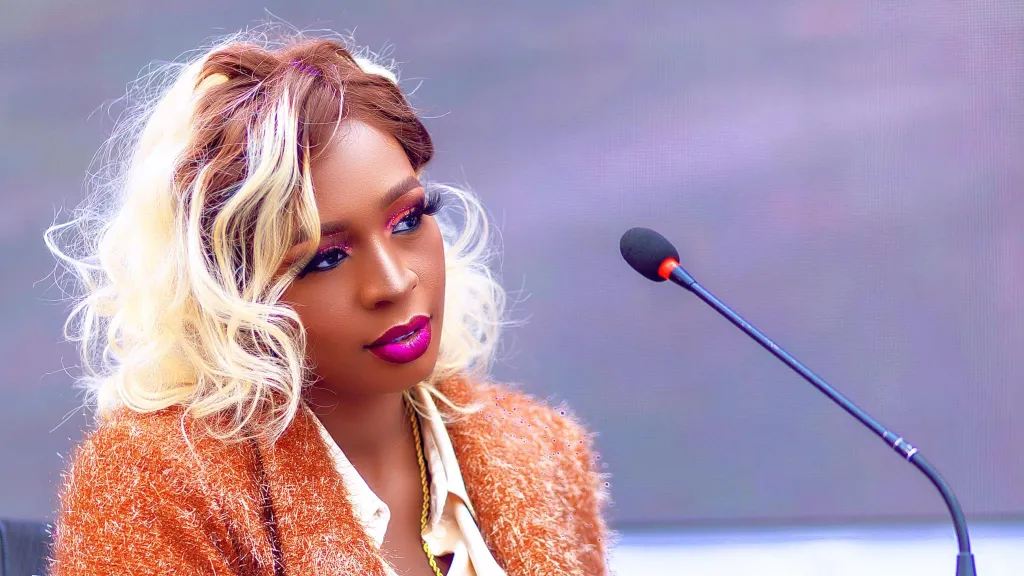
Cindy Sanyu has broken down how revenue sharing will work following the recent passing of the copyright bill by the Parliament of Uganda. According to Cindy, the new framework is a big win for artists who have, for years, earned the least despite being the primary creators. She revealed that under the updated system, artists will now take the largest share. They will receive 60 percent of the revenue. The remaining 40 percent will be distributed among the government, producers with properly registered work, and other stakeholders. Consequently, the Uganda artist revenue model has fundamentally shifted.
She said that for producers to benefit from this system, they must formally register their beats with Uganda Performing Rights Society (UPRS) and Uganda Registration Services Bureau (URSB). “For a producer to earn from this, they should’ve registered their beats with UPRS and URSB so that you’re given a code. For every time the beat is used, you earn off it.” Therefore, registration becomes essential for producers seeking ongoing income.
Producer Options Under New Framework
However, Cindy noted that producers who prefer not to go through the registration process can still negotiate payments directly with artists during studio sessions. This option preserves traditional arrangements for producers who value simplicity over long-term royalties. They can receive one-time payments for their work. Nevertheless, they forfeit ongoing earnings from future uses of their beats.
The dual system accommodates different business models. Registered producers participate in the ongoing revenue stream. Unregistered producers rely on upfront negotiations. Both approaches remain valid under the Uganda artist revenue framework. Artists and producers must now choose which model suits their needs.
Remix Rules Clarified
Cindy also issued a warning to creatives interested in remixes. She stressed the importance of obtaining proper authorization before creating derivative works. “They don’t break any law as long as they’ve gotten written consent from the artist allowing them to remix their songs or beats.” This clarification addresses a common practice in the music industry.
Remixes have long been a gray area in Ugandan music. Many artists create remixes without permission, assuming it falls under fair use. The new framework makes clear that written consent is required. This protects original creators while allowing collaborative creativity. Artists can now proceed with confidence when they have proper authorization.
Cindy’s Personal Position
Cindy made it clear that she is open to others benefiting from her music, but only through mutual understanding and agreement. “As long as we get to sit down and talk about how I get my share, I have no problem with such people. We invest a lot in our music so we need to see value.” Her statement reflects the broader shift toward professionalizing the industry.
This attitude matters for industry development. When successful artists support proper compensation, it sets an example. Others may follow suit. The Uganda artist revenue framework depends on widespread compliance. Artists like Cindy leading by example encourages others to participate.
The 60-40 Split Explained
The 60 percent artist share represents a significant increase from previous arrangements. Historically, artists received small portions of revenue while intermediaries captured most value. The new framework recognizes artists as primary creators. It allocates them the largest portion accordingly.
The remaining 40 percent covers multiple stakeholders. Government receives its share through taxes and fees. Registered producers receive ongoing royalties. Other stakeholders may include distributors, promoters, and collecting societies. The exact breakdown within the 40 percent will depend on regulations still being developed.
Registration Process Details
Producers seeking registration must work with UPRS and URSB. These agencies will issue unique codes for each registered beat. The code tracks usage and triggers payments when the beat appears in commercial works. This system requires robust infrastructure and accurate data collection.
Registration costs and requirements remain unclear. Producers should monitor announcements from relevant agencies. The Uganda artist revenue framework will only function effectively if registration is accessible and affordable. High barriers could push producers toward informal arrangements instead.
Implications for Collaboration
The new framework changes how artists and producers collaborate. Previously, producers often received flat fees regardless of a song’s success. Now, registered producers share in ongoing success. This aligns incentives and encourages higher quality work.
However, it also introduces complexity. Contracts must specify whether producers register or accept flat fees. Artists must ensure they have proper rights to beats they use. The Uganda artist revenue system demands more formal business relationships. This professionalization benefits the industry long-term.
Looking Forward
The copyright bill now awaits presidential assent. Once signed, regulations will be developed. During this period, artists and producers should prepare. They should gather documentation, consider registration options, and educate themselves about the new system.
Cindy Sanyu’s explanation provides valuable guidance. Her breakdown helps artists understand what the Uganda artist revenue framework means for them. The 60 percent artist share represents real progress. However, realizing its benefits requires active participation. Artists must register their works. Producers must decide their approach. Everyone must respect the new rules around remixes and permissions. The framework creates opportunity, but only those who engage with it will benefit.